If you’re planning exterior painting in Canyon Crest, you’ll want a strategy that shields your home from intense sun, heat, and moisture while keeping curb appeal intact. Pick UV-stable, climate-ready paints, prep surfaces carefully, and plan for routine upkeep to avoid costly repairs. Keep contractors accountable with clear timelines and paint codes—but there’s more to choosing finishes and colors that really work here.
Main Points
- Use climate-resistant acrylic latex with UV inhibitors and mildew additives suited for Canyon Crest’s heat and sun exposure.
- Inspect and prepare surfaces: power wash, strip loose paint, treat mildew, repair rot, sand glossy spots, and prime bare wood.
- Choose UV-stable pigments and test swatches on west-facing walls, viewing at dawn and dusk for true color.
- Expect a typical single-family project to take 5–10 working days, with costs split across labor, materials, and repairs.
- Schedule seasonal inspections, annual washing, immediate chip touch-ups, and record paint codes and contractor details for maintenance.
How Exterior Painting in Canyon Crest Protects Against Sun and Heat
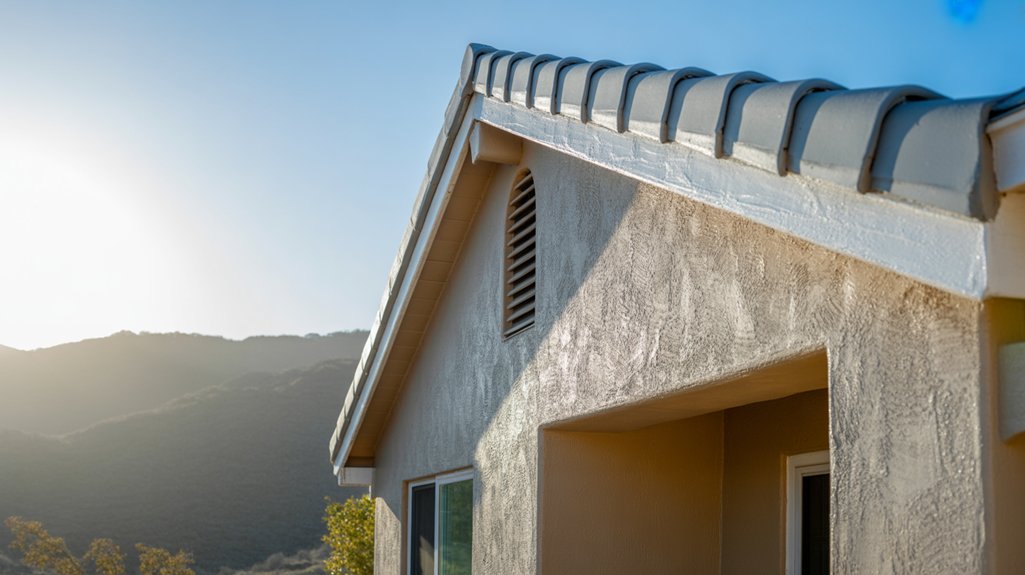
Think of a fresh coat of exterior paint as a shield for your home—reflective finishes and high-quality pigments reduce heat absorption, lowering surface temperatures and limiting sun damage over time.
A fresh exterior paint coat acts as a shield—reflective, high-quality pigments cut heat absorption and protect surfaces.
You’ll notice cooler walls and less thermal stress on siding, trim, and roofing materials, which cuts down on cracking, warping, and paint breakdown.
Properly applied coatings seal pores, block UV rays, and prevent moisture-driven deterioration, extending material lifespan.
Routine maintenance keeps that protective barrier effective, so inspect for fading or chalking and address issues quickly.
You’ll preserve curb appeal and reduce long-term repair costs with strategic exterior painting.
Choose the Right Paint Type and Finish for Canyon Crest Homes
You’ll want paint formulated for Canyon Crest’s heat and UV exposure to resist fading and chalking.
Pick finishes—like satin or low-sheen—that balance durability with the look you want on trim and siding.
I’ll walk you through climate-resistant options and the best finish choices for long-lasting protection.
Climate-Resistant Paint Options
Because Canyon Crest sees intense sun, occasional humidity, and chilly night breezes, choosing climate-resistant paint is one of the smartest investments you can make for your home’s exterior.
Pick high-quality acrylic latex formulations with UV inhibitors to prevent fading and chalking. Look for mildew- and moisture-resistant additives for shaded or humid areas.
Elastic or elastomeric paints bridge hairline cracks and handle temperature swings, but use them selectively. Check VOC levels and manufacturer warranties for exterior conditions similar to Canyon Crest.
Test small sections before full application to guarantee adhesion and color stability under your specific microclimate conditions.
Finish Choices For Durability
After picking climate-resistant formulations, match the right paint type and finish to each surface and exposure for lasting protection. You’ll choose finishes that balance durability, maintenance, and appearance.
High-traffic trim and doors need hard-wearing semi-gloss or gloss to resist scuffs and moisture. Siding benefits from satin for mildew resistance and easier cleaning, while rough stucco prefers flat or low-sheen elastomeric to hide texture and hairline cracks.
Metal and railings demand rust-inhibiting enamel. Consider UV-stable pigments and topcoats on west-facing walls to reduce fading and chalking so your Canyon Crest home stays protected and looks sharp.
- Trim: semi-gloss/gloss
- Siding: satin
- Stucco: elastomeric/flat
- Metal: enamel
Prepare Siding and Trim: Local Prep Steps Pros Always Follow
Start by inspecting every surface—siding, trim, and joints—to spot loose paint, rot, mildew, or gaps that’ll ruin a new finish.
You’ll strip loose paint, scrape edges, and sand glossy spots for adhesion.
Treat mildew with a diluted bleach solution, rinse thoroughly, and let wood dry.
Replace rotten boards or trim and use epoxy for small repairs.
Caulk gaps with paintable exterior caulk, tooling smooth joints for a seamless bead.
Prime bare wood and patched areas with a bonding primer.
Clean surfaces of dust and grit, then mask and protect landscaping before you paint.
Pick Colors That Boost Curb Appeal in Canyon Crest Neighborhoods
Choose colors that respect Canyon Crest’s light, landscape, and neighborhood character to make your home stand out for the right reasons. You’ll pick hues that complement local oak and chaparral, read well in golden afternoon sun, and fit nearby rooflines. Test swatches on different walls and view them at dawn and dusk. Stick to a cohesive palette for body, trim, and accent to avoid visual clutter.
Choose hues that honor Canyon Crest’s light and landscape—test swatches at dawn and dusk; keep a cohesive palette.
- Warm earth tones for sun-drenched facades
- Muted greens to echo native plants
- Soft neutrals for resale-friendly curb appeal
- Bold accents on doors and shutters
Cost Breakdown and Timeline for a Typical Canyon Crest Exterior Job
To plan your Canyon Crest exterior paint job, you’ll want a clear project cost breakdown showing labor, materials, and any extras.
Expect a typical project timeline that covers prep, painting, and final touch-ups, with total duration depending on house size and weather.
Don’t forget permit and prep time—those steps can add days or weeks before painting actually starts.
Project Cost Breakdown
Breaking down costs for a typical Canyon Crest exterior paint job helps you see where your money goes and how long each phase takes, from surface prep and repairs to priming, two coats of paint, and final touch-ups.
You’ll typically pay for labor, materials, repairs, and extras. Labor varies by crew size and complexity; materials include primer, topcoat, caulk, and tape. Repairs cover carpentry, stucco patching, and rust treatment. Extras include scaffolding, permits, and HOA compliance.
Here’s a simple cost snapshot:
- Labor: 40–55%
- Materials: 15–25%
- Repairs: 15–25%
- Extras: 5–10%
Typical Project Timeline
While timelines vary with weather and scope, you’ll usually see a Canyon Crest exterior paint project complete in 5–10 working days for an average single-family home: 1–2 days for detailed prep and repairs, 1 day for priming, 2–3 days for two topcoats (including drying time), and the remainder for final touch-ups, cleanup, and inspections.
You’ll first get a clear schedule outlining daily tasks and access needs. Crews work methodically: prep and repairs, primer, topcoats, then detailing. Expect brief weather pauses and daily progress updates. You should plan around the crew’s access and keep pets and plants protected.
Permit And Prep Time
Because local codes and HOA rules often affect scope and timing, you’ll want to factor permit and prep steps into both cost and schedule from day one. You’ll typically budget for permit fees, inspections, and extra days for approvals before crews start.
Prep includes power washing, patching siding, masking landscaping, and scaffold setup — each adds labor and potential rental costs. Communicate with your contractor to get line-item estimates and realistic buffers for weather or review delays so you won’t be surprised.
- Permit applications and associated fees
- Site assessment and required repairs
- Surface cleaning and protection measures
- Scaffolding and equipment setup and inspection
Hiring a Pro: Questions to Ask Canyon Crest Painters Before You Sign?
Want to make sure your exterior paint job lasts and looks great? Ask for proof of licensing, insurance, and local permits so you’re protected.
Request a detailed written estimate: scope, materials, brands, prep steps, timeline, and cleanup.
Inquire about surface preparation methods and how they’ll address rot, mildew, or lead.
Ask for a project supervisor’s contact and crew experience.
Get references and recent photos of similar Canyon Crest jobs.
Confirm warranty terms, what it covers, and response times for touch-ups.
Clarify payment schedule—hold final payment until you’re satisfied with completion and cleanup.
Maintain Your Exterior Paint: Seasonal Care and Touch-Up Tips
Now that you’ve picked a pro and agreed on scope and warranty, keep that fresh exterior looking its best with simple seasonal care and timely touch-ups.
Check siding and trim each season for cracks, peeling, or mildew.
Clean with a mild detergent in spring, rinse after winter grime, and clear gutters to prevent water damage.
Touch up chips promptly with matching paint and primer to stop moisture intrusion.
Record paint codes and contractor notes for future jobs.
- Inspect for damage quarterly.
- Wash surfaces annually.
- Repaint or touch up small areas immediately.
- Maintain records and contractor contacts.
Frequently Asked Questions
Will Exterior Painting Affect My Home Insurance or Warranty?
Yes — exterior painting can affect your home insurance or warranty. If you use approved materials and licensed contractors, you’ll maintain coverage; poor work or unapproved products might void warranties or lead insurers to deny claims, so keep records.
Can Painters Match Historical Color Palettes for Older Canyon Crest Homes?
Yes — you can have painters match historical color palettes for older homes; they’ll research period colors, sample paints, adjust hues for weathering, and replicate finishes so your house retains authentic, era-appropriate appearance and curb appeal.
Do Painters Handle Lead-Based Paint Testing and Certification?
Yes — you can expect painters to arrange lead-based paint testing and, if needed, hire certified abatement contractors; they’ll coordinate inspections, follow safety protocols, and guarantee certifications and documentation are provided for compliant remediation.
How Do Painters Protect Landscaping and Outdoor Hardscapes During Work?
You cover plants and hardscapes with tarps and plastic, secure edges with weights or tape, create walkable pathways, use drop cloths and plywood for protection, keep tools contained, and clean debris frequently so nothing gets damaged.
Are There Eco-Friendly Low-Voc Disposal Options for Old Paint and Materials?
Yes — you can dispose of old paint and materials responsibly: take them to household hazardous waste collection events, donate usable cans, use community recycling programs, and hire certified hazardous-waste haulers who’ll follow low-VOC, eco-safe procedures.
Call for Quote Today
You’ve learned how exterior painting in Canyon Crest shields your home from sun, heat, and moisture while preserving curb appeal—when you pick UV-stable acrylics, the right finish, and do proper prep. Now take action: document paint codes, get multiple estimates, verify licenses and warranties, and schedule washing and seasonal touch-ups. With a clear plan, durable materials, and a trusted pro, you’ll extend your paint’s life, protect your investment, and keep your home looking great.